





Business Rescue Success Rates Just Hit 66%, and Small Companies Preserve More Value Through It Than Large Ones Do
TL;DR
- Business rescue success rates in South Africa have risen from 55% before October 2023 to 66% by 2026, according to CIPC data, a meaningful shift that changes how a credit provider should think about accounts entering the process
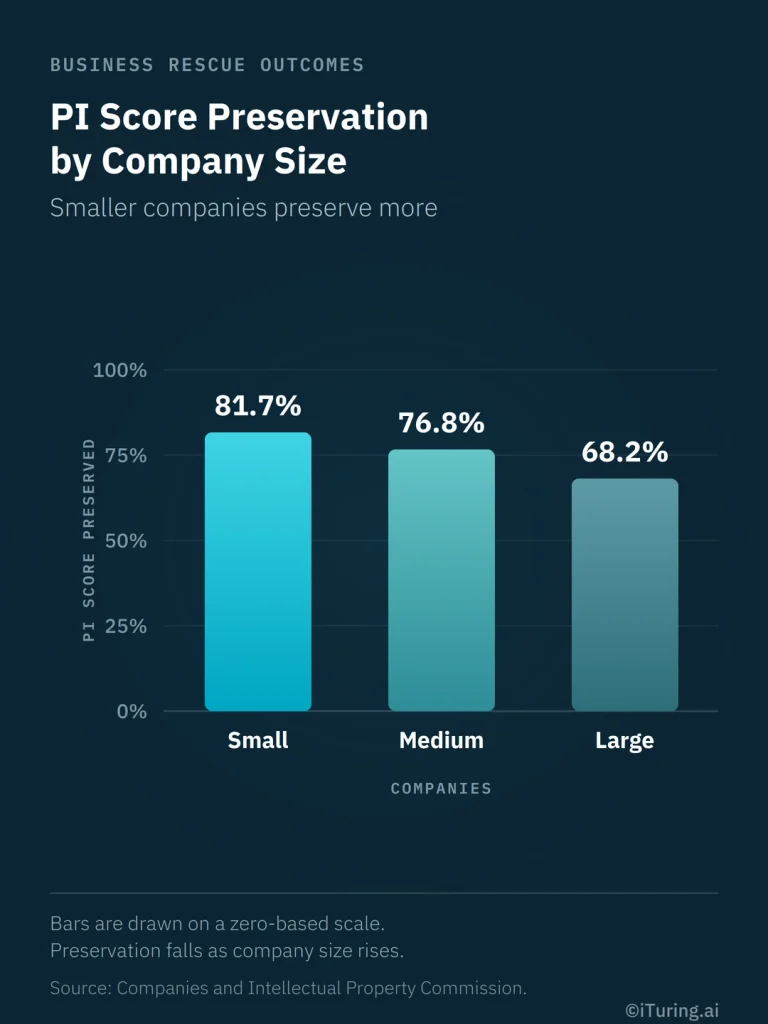
- Small companies preserve 81.7% of their public interest score, a metric capturing employment, turnover, and liabilities, through business rescue, compared to 76.8% for medium-sized firms and 68.2% for large companies, meaning smaller SME accounts are actually where rescue works best, not where it’s least likely to help
- February 2026 saw 48 companies enter business rescue, the highest monthly figure on record, signalling this is a growing, not shrinking, part of the credit landscape credit providers need a deliberate strategy for
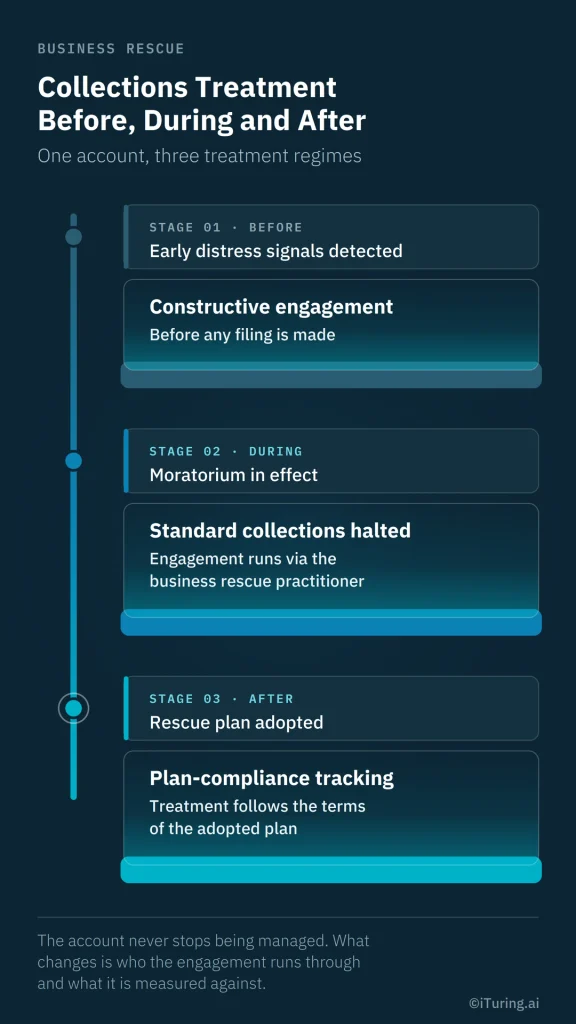
- Business rescue triggers a moratorium restricting most creditor enforcement action, and AI collections treatment needs to recognise this status and adjust automatically, not continue standard collections activity that the moratorium prohibits
- Early identification of accounts likely to enter business rescue, before the filing, allows a credit provider to engage constructively earlier rather than being caught unprepared once the moratorium is already in place
- Recovery rate data differs meaningfully between rescue and liquidation paths, and this comparison should inform how a credit provider approaches an SME account showing distress signals, not just how it reacts once rescue has already been filed
The instinct with an SME account heading toward business rescue is often to treat it as effectively lost, a legal process the credit provider has limited influence over and modest expectation of recovery from. The current data doesn’t support that instinct, particularly for smaller companies specifically. Business rescue success rates have climbed meaningfully, and small firms preserve more value through the process than larger ones do.
What Business Rescue Under Chapter 6 Means for Collections
Business rescue, governed by Chapter 6 of the Companies Act, gives a financially distressed company a formal, court- or board-initiated process to restructure and continue operating, rather than proceeding directly to liquidation. Once a company is in business rescue, a moratorium restricts most creditor enforcement action, meaning standard collections activity that would otherwise proceed against a distressed SME account has to pause or change form entirely for the duration of the process.
CIPC data shows this is a growing part of the landscape, not a marginal one: February 2026 recorded 48 companies entering business rescue, the highest monthly figure on record, following a broader pattern of tough trading conditions across sectors. For any credit provider with meaningful SME exposure, accounts entering this process are a recurring operational reality, not an edge case.
The Case for Engaging Constructively, Not Writing Off
The outcome data changes the calculus meaningfully. Business rescue success rates have risen from 55% before October 2023 to 66% by 2026, and the improvement is concentrated exactly where SME credit providers have the most exposure: small companies preserve 81.7% of their public interest score, a CIPC metric capturing employment, turnover, and liabilities, through the rescue process, compared to 76.8% for medium-sized companies and 68.2% for large companies. This is a genuinely counterintuitive finding worth sitting with: smaller companies are not the segment where business rescue works least well. They’re the segment where it currently works best.
For a credit provider managing an SME portfolio, this means an account entering business rescue isn’t automatically a write-off scenario. It’s a process with a majority success rate overall, and a meaningfully higher preservation rate for exactly the kind of smaller enterprise accounts most SME lenders carry in volume.
Identifying Accounts Likely to Enter Business Rescue Early
Behavioural and financial signals, deteriorating payment patterns, declining trade credit terms with suppliers, cash flow stress indicators similar to those used in general MSME collections monitoring, can flag accounts moving toward business rescue before the filing itself. Early identification matters because it allows a credit provider to engage constructively ahead of the moratorium taking effect, understanding the business’s situation and positioning for a more informed role once the formal process begins, rather than being caught reactively once enforcement options have already narrowed.
Moratorium Obligations and What Collections Activity Remains Permissible
Once business rescue begins, the moratorium significantly restricts direct enforcement action against the company, and an AI collections system needs to recognise this status change immediately and automatically adjust its treatment logic, halting standard collections activity that the moratorium prohibits and redirecting the account into whatever engagement channel remains appropriate during the rescue process, generally through the appointed business rescue practitioner rather than direct borrower contact.
Adjusting AI Treatment Once a Rescue Plan Is Adopted
Once a business rescue plan is formally adopted, the terms of that plan, not the original loan agreement, generally govern the ongoing relationship, and collections logic needs to shift accordingly: tracking compliance with the adopted plan’s specific terms rather than continuing to apply standard delinquency-based treatment paths designed for accounts outside the business rescue process entirely.
Recovery Rate Data: Rescue vs Liquidation Paths
Given that business rescue now succeeds 66% of the time overall, and meaningfully more often for smaller companies specifically, comparing this outcome against what a credit provider would realistically recover through liquidation of the same account is a genuinely important input into how proactively to engage once distress signals first appear, rather than waiting passively for a filing to happen and reacting only then.
Where iTuring Fits
iTuring’s Collections & Recovery module builds early distress signal detection for SME accounts, automatic recognition of business rescue moratorium status with treatment logic that adjusts accordingly, and plan-compliance tracking once a rescue plan is adopted, so an account’s full journey through this process is handled by design rather than requiring manual reclassification at each stage.
Sources
- Companies and Intellectual Property Commission (CIPC), business rescue outcome data, cited via Business Day/Sunday Times/TimesLIVE reporting, May 2026
- Turnaround Management Association Southern Africa (TMA-SA), analysis of CIPC business rescue filing data, June 2026
- Companies Act 71 of 2008, Chapter 6 (business rescue provisions)
- Companies Act amendments affecting Section 135, effective December 27, 2024