MLOps for SA Credit Providers: What AI Collections Implementation Looks Like

TL;DR Building an AI collections model and running one are two different disciplines. A model that performs well in development can fail in production for reasons that have nothing to do with the quality of the underlying algorithm. The training data becomes stale as the portfolio evolves. The portfolio composition shifts toward product types the […]
What Most Banks Still Get Wrong About AI Fairness

The most dangerous thing about biased AI in lending is that it rarely looks biased. It looks efficient, mathematical, objective, and scalable, which is exactly why institutions trust it so quickly. Over the last decade, banks have aggressively modernized credit decisioning using AI and machine learning. The promise was compelling: faster approvals, better risk assessment, […]
CFPB Enforcement of AI-Generated Collections Communications: What’s at Stake
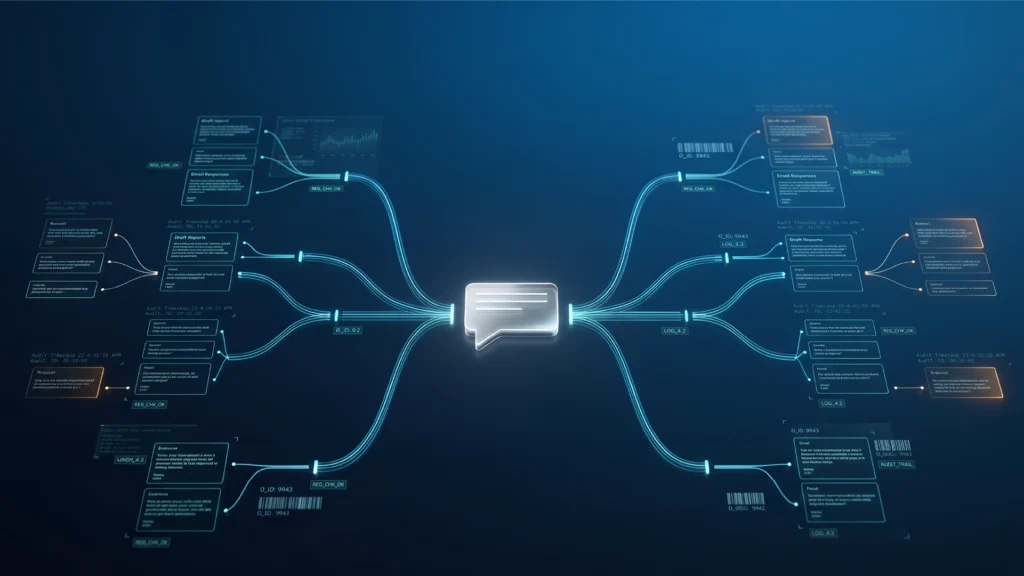
TL;DR Think of a factory that installs new automated machinery but keeps filing the same safety inspection reports it wrote for the manual line. The machines are faster, the output is larger, and the floor looks nothing like it did. But the documentation still says “operated by hand.” When the inspector arrives, the gap between […]
Beyond the Boardroom: How No-Code AI is Transforming Gen AI Governance from Policy to Practice

Gen AI governance fails in the gap between a policy document and a system that enforces it. For US financial institutions, a top-down committee and manual checks do not scale across many models, each able to produce biased or fabricated output. A no-code platform closes the gap by automating the core governance pillars, model risk […]
How Open Data Accelerators Are Redefining the AI Journey?

All organisations are dealing with more data than ever before. Yet, getting that data to deliver meaningful results is often a slow and messy process, and sometimes frustrating. Teams switch between tools, pipelines break, model development takes six months to confirm what we already knew, and by the time the insights reach the hands of […]
Why ML Ops Is the Backbone of AI Success in Banking

TL;DR Most banking AI fails in the gap between building a model and running it in production, where data science hands models to operations and the two lose sync. ML Ops closes that gap by making models versioned, deployed, monitored, and governed as one continuous practice across data science, IT, and the business. In banking, […]
The Rise of Autonomous Banking

Banks spent decades getting smarter, and intelligence is no longer the constraint. Execution is. Predictive and generative AI mostly produce insights that sit in dashboards waiting for a human to act. Agentic AI changes that: given a business objective, an AI agent investigates, communicates within guardrails, triggers workflows, and updates systems until the objective is […]
POPIA Compliance for AI Collections in South Africa: Meeting Data Processing and Automated Decision Requirements Under FSCA Oversight

TL;DR A customer receives an automated SMS telling them their account has been flagged for collections. They do not recognise the amount. They want to know how the decision was made. They ask for a human to review the case. Under South African law, that request is a legal right, not a customer service preference. […]
Explainable AI in Banking: Meeting OCC Requirements for AI Model Transparency in Collections and Underwriting

TL;DR Model risk executives at US banks face a new ai governance requirement in 2026. OCC examiners are rejecting black-box AI models during SR 11-7 validation even when those models outperform traditional logistic regression scorecards on every performance metric. The Comptroller’s Handbook on Model Risk Management now explicitly addresses AI use cases including credit underwriting, […]
Model Governance for AI Collections: Building a Framework That Passes OCC and Federal Reserve Examination

TL;DR Who owns your AI collections propensity model? Who approved the last parameter update, and where is that approval documented? When the model retrains next month, who decides whether that constitutes a material change requiring full revalidation or a routine update that can proceed under expedited review? If your collections AI includes agents hosted by […]