


Why ML Ops Is the Backbone of AI Success in Banking

The Promise and Pitfall of AI in Banking As banks today are racing to harness the power of artificial intelligence—deploying machine learning models for fraud detection, credit scoring, customer personalisation, and regulatory compliance. Yet, despite significant investments, many institutions struggle to realise the full value of their AI initiatives. The culprit? A disconnect between data […]
Why Model Risk Management Matters
Artificial intelligence has moved from experimentation to boardroom priority in a remarkably short time. Most large enterprises now run multiple AI initiatives — fraud detection systems, predictive analytics platforms, generative AI copilots, and customer intelligence tools. Yet one pattern has become increasingly clear to me over the past decade. Many organizations can build AI models. […]
The Rise of Autonomous Banking
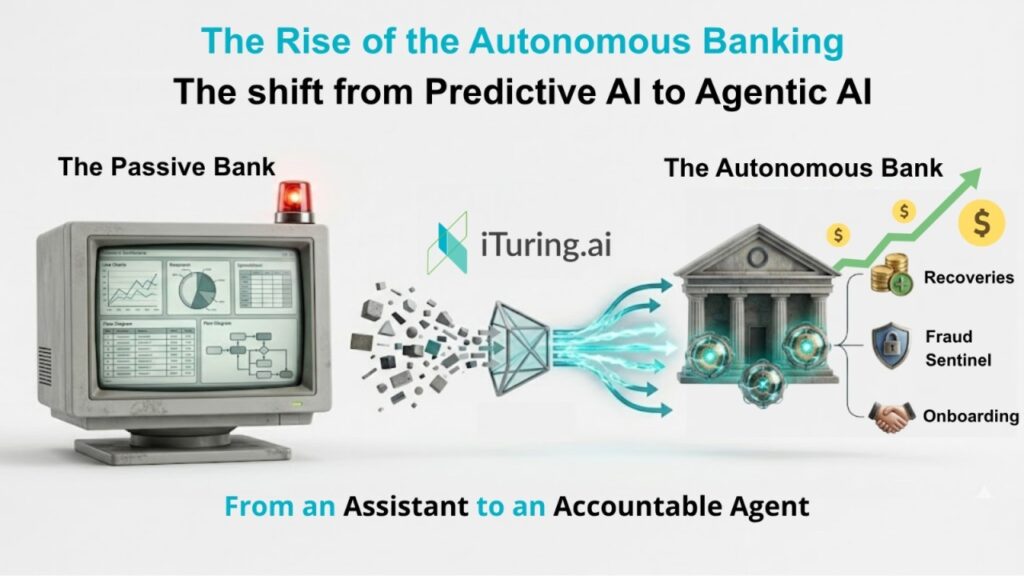
For decades, banks have invested in becoming smarter. Today, intelligence is no longer the constraint. Execution is. The next competitive advantage in banking will not come from better insights, but from systems that can act on them. For years, banking and financial services have cycled through familiar themes such as digitalization, Big Data, and more […]
Basel III Model Validation for South African Banks: Meeting Prudential Authority Standards for AI Credit Risk and Collections Models

TL;DR On 24 November 2025, the Prudential Authority of the South African Reserve Bank and the Financial Sector Conduct Authority jointly published a report on artificial intelligence in South Africa’s financial sector. The report drew on analysis conducted throughout 2024 and set out, for the first time in a formal joint publication, the regulators’ view […]
TCF Outcome Measurement for Collections: How South African Banks Demonstrate Fair Treatment Under FSCA’s Six Outcomes Framework

TL;DR There is a well-known gap in how South African financial institutions handle the TCF framework. Every regulated bank and insurer has a TCF policy. Most have TCF training programmes. A significant number have TCF committees. What far fewer have is TCF outcome measurement for collections specifically: the operational data, the management information reports, and […]
NCA Affordability Assessment with AI: How South African Lenders Use Machine Learning for Compliant Credit Decisioning

TL;DR In March 2026, the Webber Wentzel case law tracker published an update on a judgment that clarified a credit provider’s obligations under Section 81 of the National Credit Act to assess whether a consumer can actually afford the credit being offered. The court’s finding was unambiguous. The affordability assessment is a substantive obligation, and […]
POPIA Compliance for AI Collections in South Africa: Meeting Data Processing and Automated Decision Requirements Under FSCA Oversight

TL;DR A customer receives an automated SMS telling them their account has been flagged for collections. They do not recognise the amount. They want to know how the decision was made. They ask for a human to review the case. Under South African law, that request is a legal right, not a customer service preference. […]
Vernacular Debt Collection in India: Why Regional Language AI Improves Recovery Rates by 30% in Tier 2 and Tier 3 Cities

TL;DR “Payment nahi kar sakta” (I cannot make the payment). “Payment karne mein dikkat hai” (I am having difficulty making the payment). One signals inability. The other signals a temporary constraint. For a collections agent or an AI system deciding what to do next (escalate, offer a payment plan, or hold) the distinction determines the […]
RBI Recovery Agent Guidelines Compliance: How Indian Banks and NBFCs Automate Collections While Staying Compliant in 2026
TL;DR On February 10, 2026, the Reserve Bank of India released a draft framework proposing uniform recovery norms across all regulated entities (banks, NBFCs, and housing finance companies) under one consolidated set of rules. Contact restrictions tightened. Data governance obligations deepened. Agent oversight requirements expanded. And the accountability for what a recovery agent does in […]
Contact Strategy Optimization for Collections: The Framework US Banks Use to Increase Right-Party Contact Rates by 28%

TL;DR For every 100 calls a collections team makes, they reach the right person roughly 20 to 26 times. The other 75 to 80 calls hit wrong numbers, disconnected lines, voicemails no one checks, or phones that ring out without an answer. Each one of those attempts costs money. Agent time, dialer minutes, compliance overhead, […]


