Unsecured Delinquency Is Rising Even as the Overall Loan Book Looks Healthier Than Ever
TL;DR
- System-wide bank NPAs in India are at multi-decade lows, but unsecured personal loan delinquency is moving in the opposite direction, with industry data showing a 44% rise in delinquencies among personal loans originated between December 2023 and June 2024, and small-ticket loans under Rs 10,000 running the highest default rates in the category
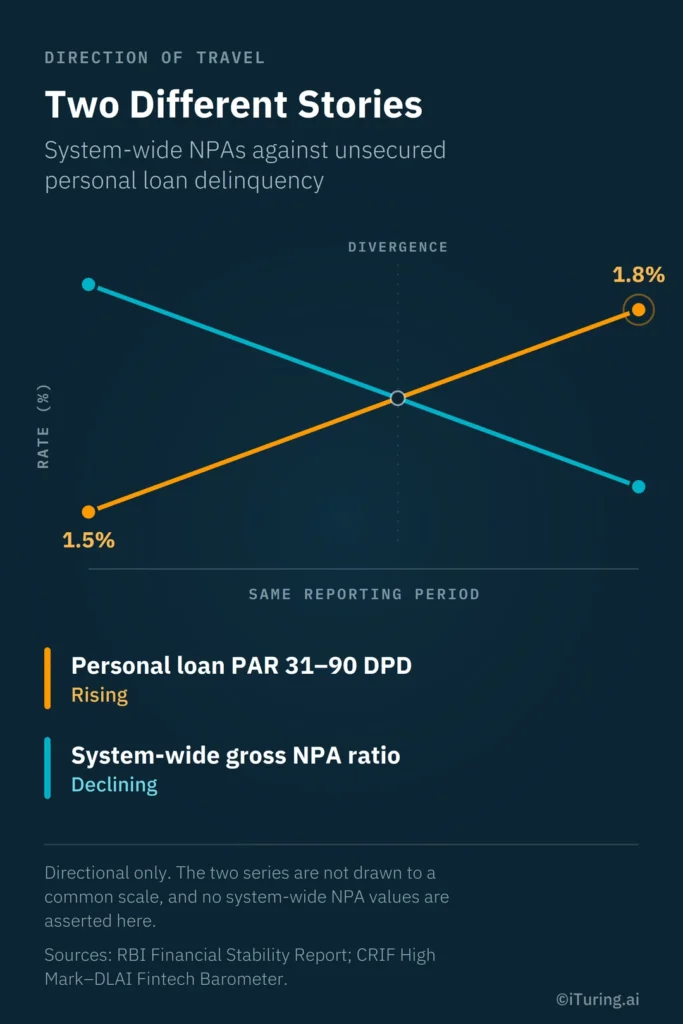
- Portfolio-at-risk for personal loans in the 31-90 day window rose from 1.5% to 1.8% year over year per industry tracking, with credit bureaus specifically flagging the risk of stress spreading from unsecured into secured lending if not actively monitored
- Unsecured lending carries no collateral fallback, making early behavioural detection more valuable here than in secured products where collateral provides a recovery backstop
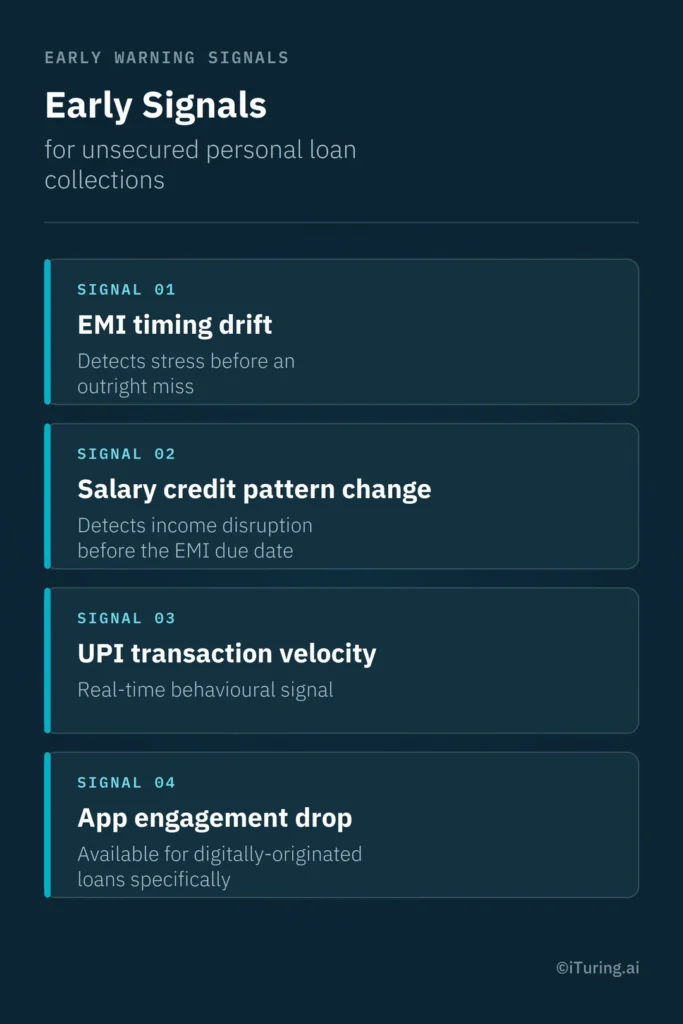
- EMI timing drift and salary credit pattern changes are stronger unsecured-specific signals than DPD alone, since they surface stress before a payment is actually missed
- UPI transaction velocity shifts and app engagement drops offer real-time, digitally-native signals particularly relevant for the growing fintech-originated personal loan segment
- Cost per recovery differs meaningfully between personal loans and secured lending, and treating both with the same contact intensity misallocates collections effort
The aggregate Indian banking system NPA story is a genuinely positive one right now, system-wide gross NPAs sit at multi-decade lows. But that headline masks a specific, well-documented divergence: unsecured personal loans are moving in the opposite direction, with delinquencies climbing even as the broader book stays clean. Treating personal loan collections with a generic, secured-lending-adjacent playbook misses exactly the signal this segment needs most.
Why Unsecured Collections Needs Its Own Playbook
A secured loan gives the lender a collateral fallback if collections efforts fail: a vehicle, a property, an asset with recoverable value. A personal loan gives the lender nothing but the borrower’s continued willingness and ability to pay. This absence of collateral makes early detection meaningfully more valuable in unsecured lending than in secured lending, because by the time a personal loan account is deep in delinquency, there’s no asset-based recovery path to fall back on the way there is with a vehicle or home loan.
Industry data makes clear this isn’t a theoretical concern. The CRIF High Mark and Digital Lenders Association of India Fintech Barometer reported a 44% increase in delinquencies among personal loan borrowers whose loans originated between December 2023 and June 2024, and small-ticket loans under Rs 10,000 specifically showed a 13.2% rise in borrower-level 90-plus-day portfolio-at-risk over a six-month window. Credit bureau CIBIL has separately flagged that rising delinquency in consumption-led lending, personal loans, credit cards, consumer durable loans, risks spreading into secured credit if lenders don’t actively monitor cross-product exposure, since nearly half of unsecured loan borrowers already carry another live retail loan.
EMI Timing Drift and Salary Credit Pattern Changes
EMI timing drift, a gradual shift in when a borrower’s payment lands relative to the due date even before an outright miss, is a stronger early signal for unsecured lending than DPD alone. A borrower whose payment has been arriving progressively closer to the deadline over several cycles is showing a pattern DPD-only monitoring won’t flag until an actual miss occurs, by which point the intervention window has narrowed.
Salary credit pattern changes, a delay in when salary lands, a reduction in credited amount, or a shift in the crediting account itself, are similarly leading indicators available well before a missed EMI, and they’re specific to the kind of income-driven repayment personal loans depend on more directly than secured lending, where a missed payment doesn’t immediately threaten total loss of income-servicing capacity.
UPI Transaction Velocity as an Early Distress Signal
Transaction velocity through UPI, changes in the pace and pattern of a borrower’s digital spending and transfers, offers a real-time view into financial behaviour that a monthly bank statement snapshot can’t match. This is particularly relevant given how much of India’s personal loan growth now flows through fintech and digital-first NBFC channels, where borrowers are digitally native and their financial behaviour is more fully visible through transaction data than through traditional bureau-only signals.
App Engagement Drop as an Underused Digital Signal
For digitally-originated personal loans, app engagement, how often and how a borrower interacts with the lending app itself, is an underused signal. A borrower who stops opening the app, stops checking their loan status, or reduces engagement significantly is often signalling either financial avoidance behaviour or genuine distress, and this signal is available specifically because the loan was originated and is serviced digitally, a channel-specific data source secured lending relationships don’t always have in the same way.
Cost Per Recovery: Personal Loans vs Secured Lending
Recovery economics differ meaningfully between personal loans and secured lending. Without a collateral recovery path, the entire value of a personal loan recovery effort depends on the borrower’s willingness and ability to pay through negotiated arrangement, making early, well-timed contact disproportionately more valuable than in secured lending, where a lender has more recovery optionality even after an account deteriorates significantly. Building cost-per-recovery benchmarks specific to unsecured personal loans, rather than inheriting secured-lending collections economics, is what actually justifies the additional investment in earlier, more behaviourally sophisticated detection for this segment.
Where iTuring Fits
iTuring’s AutoML+ and Data Accelerator modules build unsecured-specific feature families, EMI timing drift, salary credit pattern shifts, UPI transaction velocity, and app engagement signals for digitally-originated loans, directly into the collections model, rather than requiring these signals to be manually engineered on top of a secured-lending-style scorecard.
Sources
- CRIF High Mark and Digital Lenders Association of India, Fintech Barometer (Volume II)
- TransUnion CIBIL commentary on cross-product delinquency risk between unsecured and secured lending
- RBI Financial Stability Report, December 2024 and subsequent editions, on household debt and unsecured lending trends
- Current personal loan delinquency and PAR data (verify most recent quarter at time of publication, this segment moves quickly)