Model Governance in Banking: Ownership, Approval, and Retirement

Model governance in banking, covering model ownership, maker-checker approval workflows, change re-approval, and retirement processes that preserve audit trails and regulatory accountability.

TL;DR Most banks think they have model governance once a model risk policy exists and a monitoring dashboard tracks drift. Neither answers the three questions an examiner asks: who owns this model, who approved it and every change made to it, and what happens when it comes out of production. A bank without documented answers […]

AI Governance Software: The Criteria That Separate a Platform From a Checkbox Tool

AI governance software evaluation criteria, comparing comprehensive platforms with checkbox tools across model inventory, risk assessment, validation, audit trails, explainability, and ongoing monitoring.

TL;DR Financial institutions shopping for AI governance software usually start with a feature list and end up comparing marketing pages that all use the same five words: explainable, audit-ready, governed, compliant, automated. The words do not tell you which platform tiers a model by risk and which one displays a list of models someone typed […]

Model Deployment in Regulated Environments: The Five Gates Ordinary MLOps Skips

TL;DR A data science team ships a new fraud model the way it ships everything else: a pull request, a staging test, a canary rollout, done by Friday afternoon. Three weeks later, an examiner asks who approved the production release and what evidence exists that the model’s scores held stable once it went live. The […]

Model Risk Management Services: What You’re Actually Buying

TL;DR A bank buys a model risk management assessment from a consulting firm, gets a report with a scorecard and a set of recommendations, and six months later ships three new models with none of that report’s process attached to them. The engagement ended. The obligation didn’t. Model risk management services can mean several different […]

The Model Risk Governance Structure Most Institutions Only Have on Paper

TL;DR A model risk governance chart looks the same whether the structure behind it works or not: a board, a risk management committee, a senior management function, each with a box and a reporting line. What separates a functioning structure from a decorative one shows up only when someone asks what the committee actually reviewed […]

Building a Propensity Model in Banking: Where the Real Risk Hides

Propensity model in banking showing how customer behavior, data quality, model assumptions, and deployment decisions can introduce risk into lending decisions.

TL;DR A propensity model that ranks customers well on a spreadsheet and then fails the moment it meets production data has usually skipped one of three steps: it was never validated on a genuinely independent holdout, nobody checked whether its probabilities were calibrated, or it shipped without an audit trail. Getting the ranking right is […]

What is Model Monitoring and why does it matter?

Infographic explaining model monitoring, showing how lenders track model performance, data changes, drift, and risk signals after deployment.

TL;DR A model that has stopped being right doesn’t stop predicting. It just keeps going and delivering wrong output. How do you know when a model stops being right? A model that stops being reliable does not throw an error or fail a build. It keeps running and keeps producing confident-looking outputs that are quietly […]

AI Model Monitoring for Regulated Lenders

AI model monitoring for regulated lenders, showing ongoing oversight of model performance, drift, validation, risk, and regulatory compliance.

TL;DR Most teams that say they monitor their models are watching one number: is accuracy still where it should be. That’s a real signal, and it’s also a small fraction of what a lender that has to answer to an examiner actually needs to be watching. A Dashboard That Tracks Accuracy Is Not a Monitoring […]
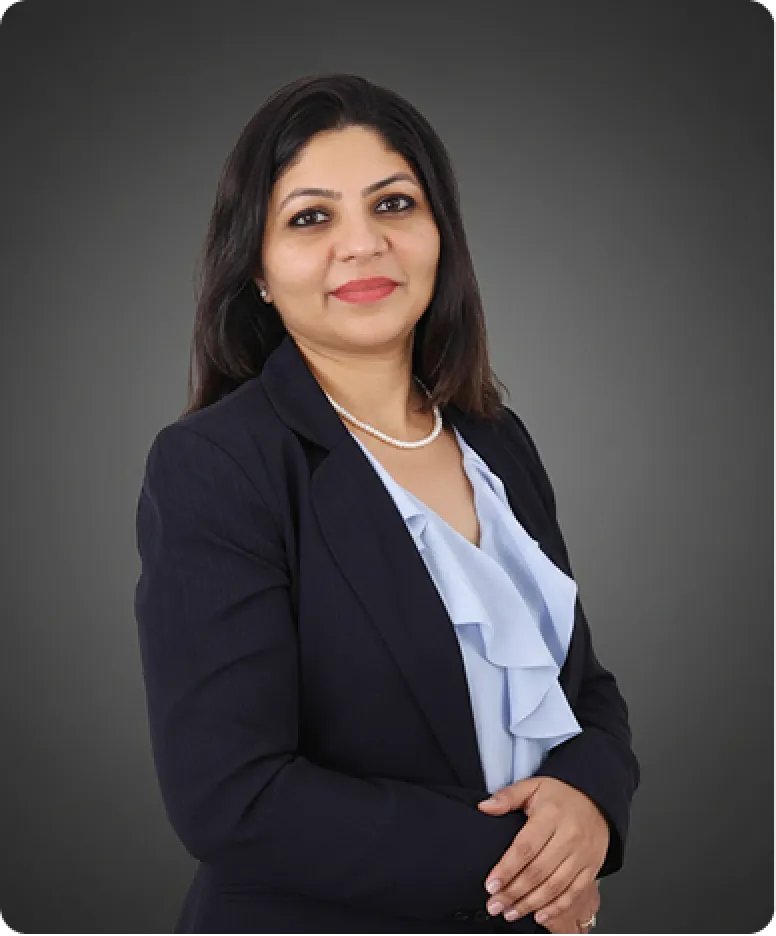
Tarika Bhutani

Senior Director – Sales and Marketing Operations

Tarika is a market development leader driving global growth through strategic partnerships and go-to-market initiatives.


She focuses on expanding enterprise adoption of AI solutions across international markets, working closely with partners and clients to enable data-driven transformation.


Her work centres on scaling enterprise AI through partner-led growth and direct customer engagement, supporting organisations in implementing impactful, data-driven solutions worldwide.

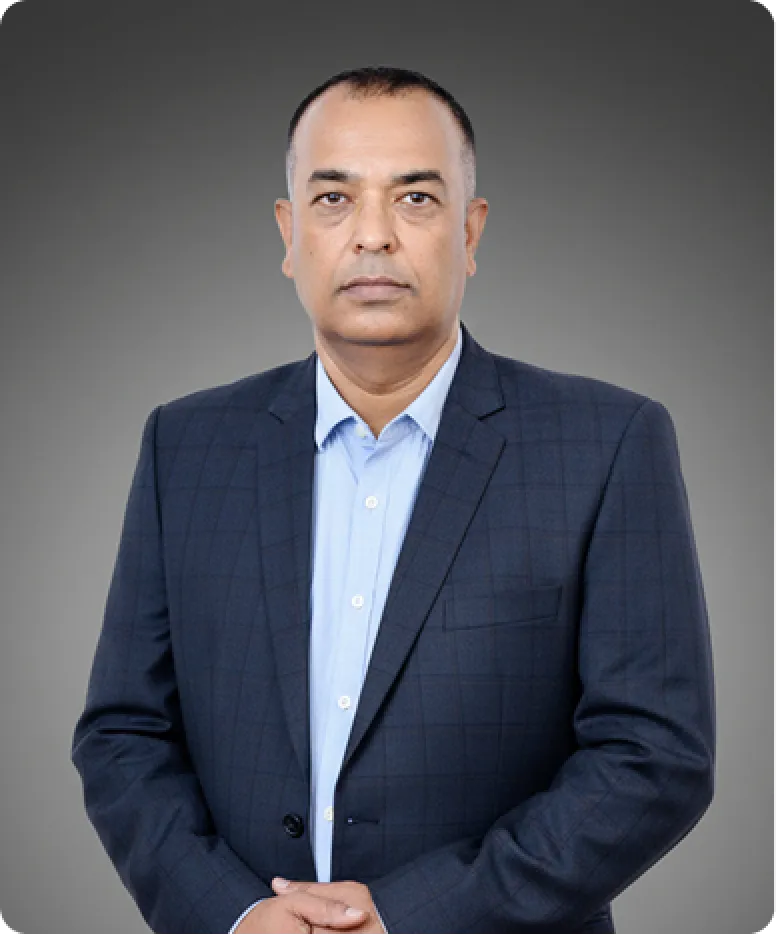
Rajnish Ranjan

Vice President, Head – Data Science

Rajnish brings over two decades of experience leading data-driven transformation across Fortune 500 organisations.


His career spans senior roles at HSBC, Zafin, Cisco, TCS, Nielsen, iQuanti, Symphony, Supervalu, and Harman, delivering measurable cost savings, operational efficiencies, and revenue growth.


With experience across banking, retail, telecom, pharma, CPG, and digital marketing, he leads cross-functional teams at iTuring.ai to deliver advanced analytics, machine learning, and AI solutions.

Aishwarya Hegde

VP Operations & Content Head

Aishwarya has been instrumental in building iTuring.ai from inception and continues to manage core operations across the organisation. Her responsibilities span project operations, financial planning, and evaluating future expansion opportunities.


Prior to iTuring.ai, she worked with Market Probe and WNS Research & Analytics, delivering high-impact decision support and actionable analytics for IBM with a record of zero errors.


Aishwarya holds a postgraduate degree in Data Science and Machine Learning from Manipal University.

Bryan McLachlan

Managing Director – Africa

Bryan has 30 years of experience driving innovation and growth across technology, banking, insurance, and retail.


Prior to iTuring.ai, he held executive leadership roles at Instant Life, AIG, Nedbank, FNB, and TransUnion. He focuses on enabling enterprises to adopt AI and machine learning within trusted, governed, and risk-managed frameworks.


Bryan holds a Master’s degree in Commerce from the University of Johannesburg.

Mohammed Nawas M P

Co-Founder, VP Product Development

Nawas brings 20 years of experience in designing and delivering cloud-native software and data systems. He has held senior technology roles at HCL, Radisys, Kyocera, and Mindtree, leading large development teams and complex product builds.


At iTuring.ai, he oversees product roadmap and customer delivery, applying cloud-first thinking, deep systems expertise, and a focus on building robust, scalable AI solutions that challenge industry norms.


He is a graduate of Rajiv Gandhi Institute of Technology.

Amit Kumar

Amit is a technology architect with over 18 years of experience designing data-intensive systems and enterprise analytics platforms. He has built highly scalable products across open architecture models and virtualised infrastructure, aligning deep technical detail with business requirements for AI and ML solutions.


Prior to iTuring.ai, he held senior technical roles at Radisys and Aricent. Amit leads platform architecture with a focus on governance, lineage, and traceability.


He holds a First Class with Distinction BTech in Computer Science from Cochin University.

Valsan Ponnachath

President, COO and Co-founder

Valsan brings over two decades of global leadership across sales, professional services, and product operations in technology and SaaS enterprises.


Prior to iTuring.ai, he held senior executive roles at Fiserv, Cisco, and Sun Microsystems, most recently serving as Senior Vice President at Fiserv overseeing global system integration and international professional services. Based in California, he leads iTuring.ai’s growth in the Americas.


Valsan holds an MBA from the University of Nebraska and a BE in Computer Science from Bangalore University.

Suman Singh

Founder & CEO

Before founding iTuring.ai in 2019, Suman led analytics at Zafin and Fiserv as CAO and General Manager Analytics, delivering enterprise-scale solutions still running in production.


His work includes fraud detection systems saving clients over $19M, patented Customer Relationship Score methodology, and price optimisation recognised by the INFORMS Edelman Award (2014). He has authored multiple research papers and pioneered the data-to-value approach.


Suman holds a Master’s in Statistics from CCS HAU and a Bachelor’s in Agricultural Engineering from BHU.